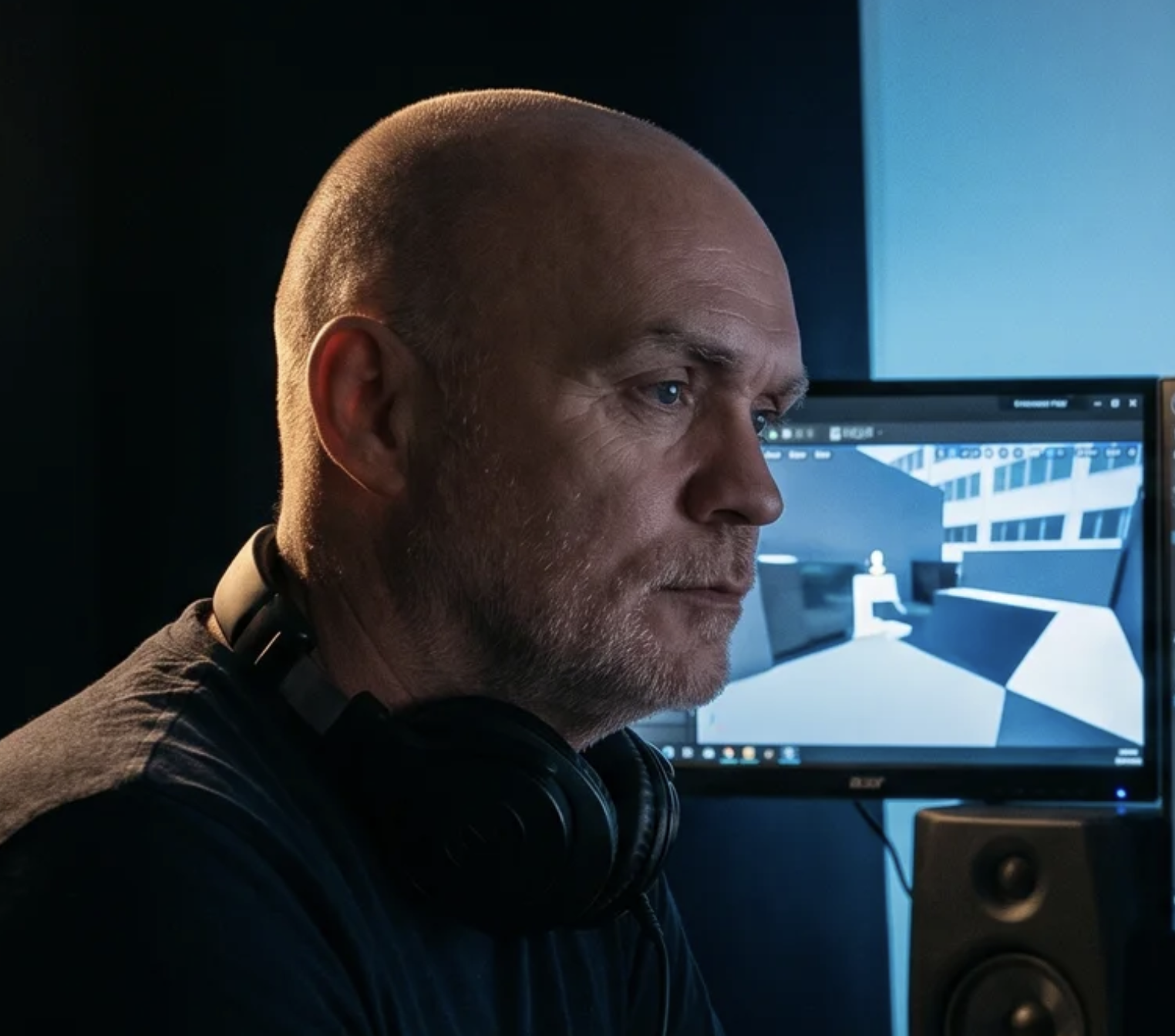
Swansea → Bristol → Manchester → Dundee → Cambridge → London → Cardiff. 1987-present.
The company-by-company version →I have written code for a living since 1987. What follows is the long way round, told in order: the projection room, the studios, the games that shipped, the ones that did not, and the string of bankruptcies I have decided to file under coincidence.
You can take this as a moderately interesting glimpse at game development over the years, or the inane ramblings of a bitter old man. Whatever you decide, make yourself a nice cup of tea. This takes a while.
The projection room
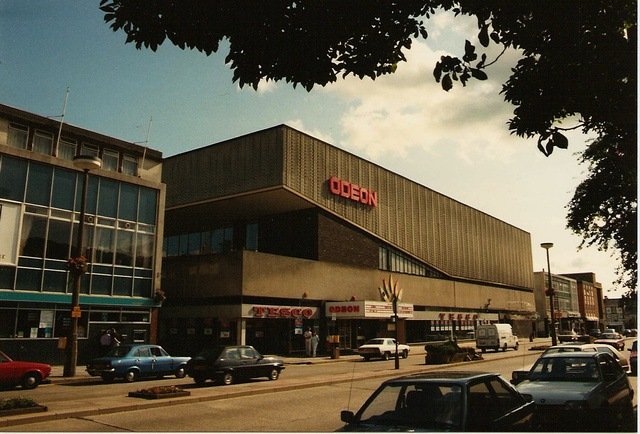
I didn't begin my career as a games programmer. I began in the film industry, performing to thousands of people every day. More accurately, I was a cinema projectionist at Swansea Odeon, back when the job involved rather more than sticking on a Blu-ray and having a snooze. This was a classy premier 70mm theatre, reduced to rubble a few years ago to make way for yet another office block.
I have always loved arcade games, and I have always had an unhealthy interest in how things work. My dream was to recreate my arcade favourites to play at home, for free. So I taught myself to program on a Commodore 64, in the projection room of the Swansea Odeon, waiting to make the next reel change. In the days before the internet, Google and Stack Overflow, that was a fairly daunting thing to take on.
Humble beginnings
In 1987 I answered an ad in the local paper for the position of 'Games Programmer'. I turned up proudly clutching my own versions of Arkanoid and Gauntlet, and was taken on more or less on the spot by a company called Catalyst Coders, for the princely sum of £700 a month. My first task was to create a Commodore 64 version of the Taito arcade machine Flying Shark.
After Flying Shark, and the rather forgettable Maze Mania, I was ready for a real studio.
Ten years at MicroProse
MicroProse was my first job at a real studio, and I spent ten wonderful years toiling in the picturesque villages of Tetbury and Chipping Sodbury in the Cotswolds, engineering audio for other people's games while managing to sneak out a few of my own. These included Knights of the Sky, the aborted (and accidentally conceived) Boulder Dash, and the mythical, but never-seen, X-COM: Alliance.
MicroProse were a classy company and, despite numerous changes of ownership, I really enjoyed my time there.
What all the fuss was about
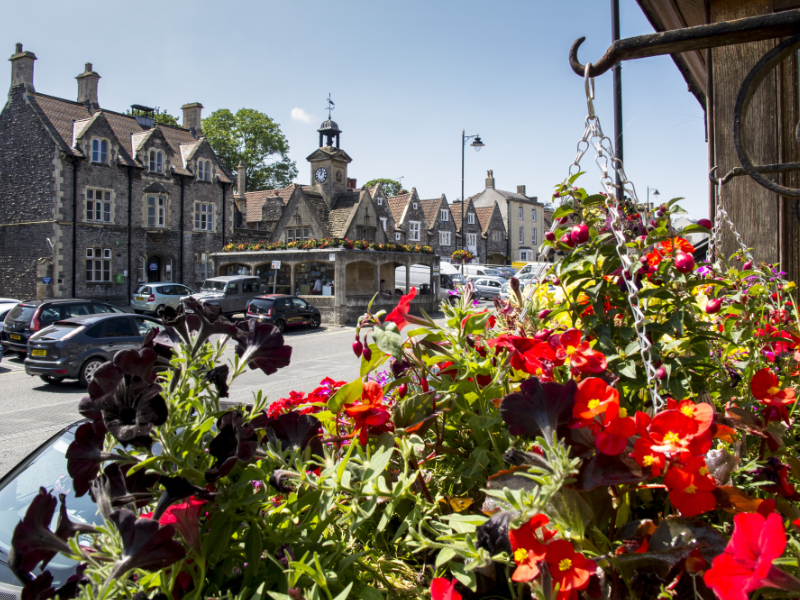
After MicroProse, a move to Manchester seemed like a nice change, mostly to see what all the fuss was about. There I joined Software Creations as Lead Programmer, working on such gems as NickToons Racing and FIFA World Cup 2002.
When Creations went bust, I moved over to Acclaim Studios, where I worked on the audio for Gladiator: Sword of Vengeance and Interview with a Made Man.
North of the border
Another messy studio bankruptcy resulted in a move to Dundee, where I joined Visual Science. Not a lot happened here. Bankruptcy loomed again before anything could get released, so it was across the road to the newly-formed Cohort Studios.
At Cohort I worked as a programmer on quite a few games: MotorStorm, Buzz! Junior Ace Racers, Buzz! Junior Dino Den, TactX (don't ask) and The Shoot.

Jagex, and the medieval canteen
Predictably, studio bankruptcy struck again. Cohort went under, and I ended up at Jagex in Cambridge. RuneScape and Transformers Universe were great projects to work on, and Jagex was a great place to work. Eventually. There was certainly never a dull day.
Because of Jagex's large social-media presence, it was not unusual to see hordes of little people walking down the corridors dressed in medieval costume, or fairytale princesses and knights in armour eating in the canteen. It was just for their ever-present film crew making promotional videos (at least, I assumed it was).
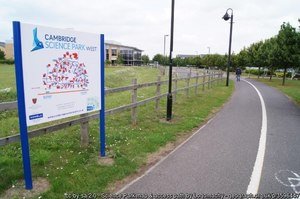
After a disastrous attempt to create an MMORPG out of the Transformers franchise, the whole thing ended up on the scrap heap. If you'd worked on RuneScape, you were in. If you'd worked on Transformers, you were out.
I was out.
Taking a punt
After brief stints at If You Can and AllYearBooks, I landed myself a job at Nektan, where I had to brush aside any moral concerns I had about writing software that added to the nation's gambling problem. This was a really good job.
After mastering their back-end, writing a few games and fixing a lot of other stuff for them, Nektan decided to get rid of the London team and move all development to India. When I started, they had plush high-rise offices in Victoria. By the end, they were in a couple of rooms in King's Cross. How the mighty have fallen!
Mathatar
At USP Software, I was asked to create a game which would act as a fun 'wrapper' for a video-based GCSE mathematics course. What started off as a quick web-game job soon became a vast 3D adventure called Mathatar. Not unexpectedly, and continuing the pattern of the previous twenty years, the funding inevitably dried up, and the game was canned.
It was such a shame to see Mathatar come to nothing; some very talented people (myself included) had put their hearts and souls into making that project a reality.
The dream job, a few miles down the road
Following my stint at USP Software, I spent a mind-numbing couple of months writing a React web app for a wannabe food-delivery company, whilst realising that web development was not right for me at the time. I was still very much in game mode. It did not help that the programming area sat in the middle of a meat-processing factory, which was not exactly pleasant.
At the same time, I secretly underwent a lengthy process to acquire my dream job at SEGA Amusements International, and was quite bemused to find that the games I had rabidly been playing in arcades over the years had been developed just a few miles down the road from where I now lived. Somehow, my varied experience of jerry-rigging, making-do and fighting adversity was exactly what made me ideally suited to be their Lead Developer.

Doubleslash Studio
After SEGA came the simulation years: VR training, tank simulators and educational apps, first for a studio in Coventry and then under my own name. Rewarding work, but I kept circling the same thought, that the things I was proudest of were the ones made carefully, by a small team who genuinely cared how they were put together.
So in May 2026 I co-founded Doubleslash Studio, a boutique outfit that hand-builds web, macOS and iOS software for people who want something made properly rather than churned out. This very website is one of ours, hand-coded down to the last detail. Nearly four decades of games, audio and simulation, all of it now feeding into whatever we build next.